So, you’re dreaming of open water, the sun on your face, and the gentle rock of a vessel beneath you. The big question often boils down to this: yacht or boat? While the terms are sometimes used interchangeably, there are distinct differences that will significantly impact your experience, budget, and suitability for your intended adventures. Generally speaking, a “boat” is a smaller vessel, usually under 30-40 feet, designed for day trips, fishing, or short overnight stays, while a “yacht” is a larger, more luxurious vessel, often over 30-40 feet, equipped for extended cruising, entertaining, and liveaboard comfort. The choice isn’t just about size; it’s about purpose, lifestyle, and the kind of freedom you’re truly seeking on the water.
Decoding the Terminology: Boat vs. Yacht
Let’s clear up the lingo because it can be a bit blurry. The core difference isn’t always a hard line, but rather a spectrum of size, features, and intended use. Understanding these nuances is crucial before you even start looking at specific models.
What Exactly is a Boat?
When most people say “boat,” they’re thinking of a wide variety of smaller vessels. These are generally more accessible, easier to handle, and typically used for specific recreational activities. Think of them as your versatile aquatic utility vehicle.
Common Types of Boats
There’s a boat for almost every type of water activity.
- Runabouts: These are popular for watersports like skiing and wakeboarding, often with open bows for extra seating. They’re generally fast, nimble, and perfect for day trips on lakes or calm coastal waters.
- Fishing Boats: Designed with anglers in mind, these range from small aluminum Jon boats for freshwater to larger center consoles equipped for offshore fishing. They often feature livewells, rod holders, and specialized electronics.
- Pontoon Boats: Known for their stable, flat deck supported by two or more pontoons, these are essentially floating platforms for entertaining, leisurely cruising, and swimming. They offer a lot of space for passengers and often come with comfortable seating and amenities like grills.
- Bowriders: Similar to runabouts, but with a dedicated seating area in the bow. They’re great all-around family boats for watersports, cruising, and general recreation.
- Deck Boats: These aim to combine the spaciousness of a pontoon with the hull performance of a runabout, offering a large open deck space.
- Sailboats (smaller classes): Many smaller sailboats, like dinghies or day cruisers, fall firmly into the “boat” category, designed for short outings driven by wind power.
Typical Use Cases for Boats
Boats are primarily for shorter adventures. You’re looking at day trips, weekend getaways, fishing excursions, or watersports activities. They’re excellent for exploring local waterways, anchoring in a quiet cove for lunch, or spending an afternoon tubing with the kids. Their smaller size makes them easier to trailer, launch, and retrieve, offering greater flexibility in terms of where you can take them.
Advantages of Owning a Boat
- Lower Initial Cost: Boats are significantly less expensive to purchase than yachts, making them a more accessible entry point into boating.
- Reduced Operating Expenses: Fuel consumption, maintenance, and insurance costs are generally much lower.
- Easier Handling: Their smaller size makes them simpler to maneuver, dock, and trailer, which is ideal for beginners or those who prefer less complexity.
- Versatility: Many boats are designed for specific activities but can often serve multiple purposes.
- Storage Options: Smaller boats can often be stored on a trailer in your driveway or in more affordable dry storage facilities.
What Constitutes a Yacht?
A yacht, by contrast, is a vessel built for comfort, luxury, and extended stays on the water. It implies a certain level of sophistication, self-sufficiency, and often, professional crew support, though many smaller yachts are owner-operated. The term itself evokes images of opulent interiors and long voyages.
Common Types of Yachts
Yachts also come in a variety of forms, tailored for different cruising styles and preferences.
- Motor Yachts: These are powered by engines and range from sleek, fast express cruisers to large, multi-deck vessels. They prioritize speed, space, and often feature luxurious interiors with multiple cabins, galleys, and entertaining areas.
- Sailing Yachts: Relying primarily on sails for propulsion, these yachts offer a different kind of connection to the sea. They can range from nimble performance cruisers to robust blue-water vessels designed for ocean crossings. They offer a quieter, often more fuel-efficient experience.
- Catamarans: These multi-hull vessels offer exceptional stability, vast deck space, and shallow drafts, making them popular for cruising in tropical waters. Both power and sailing catamarans are common.
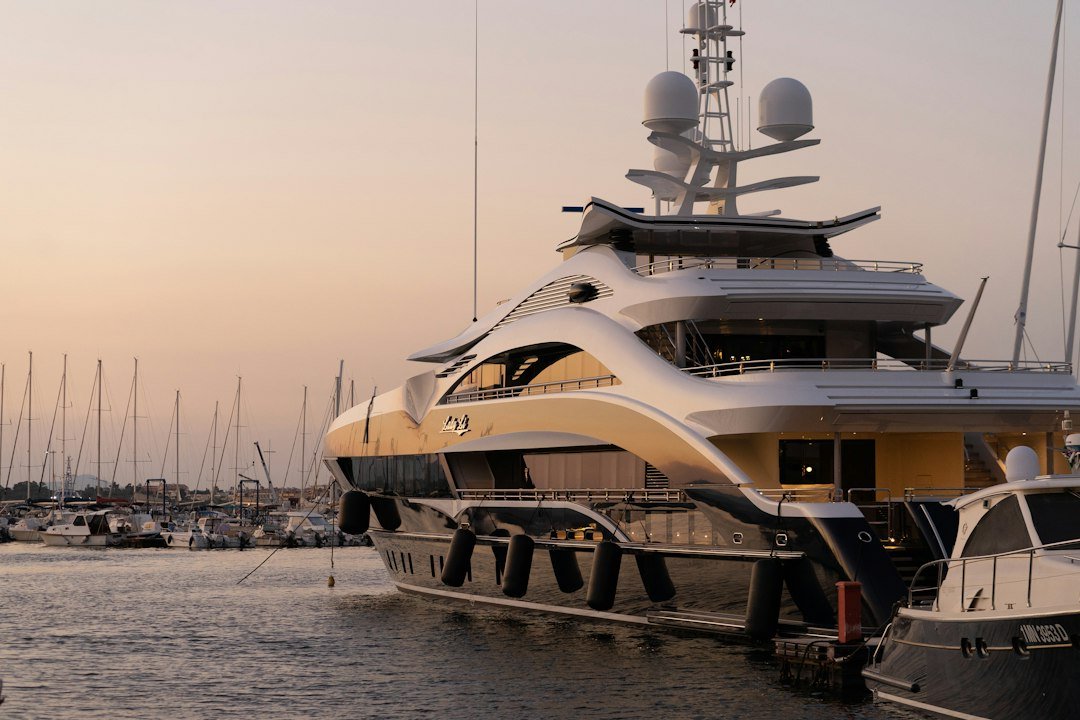
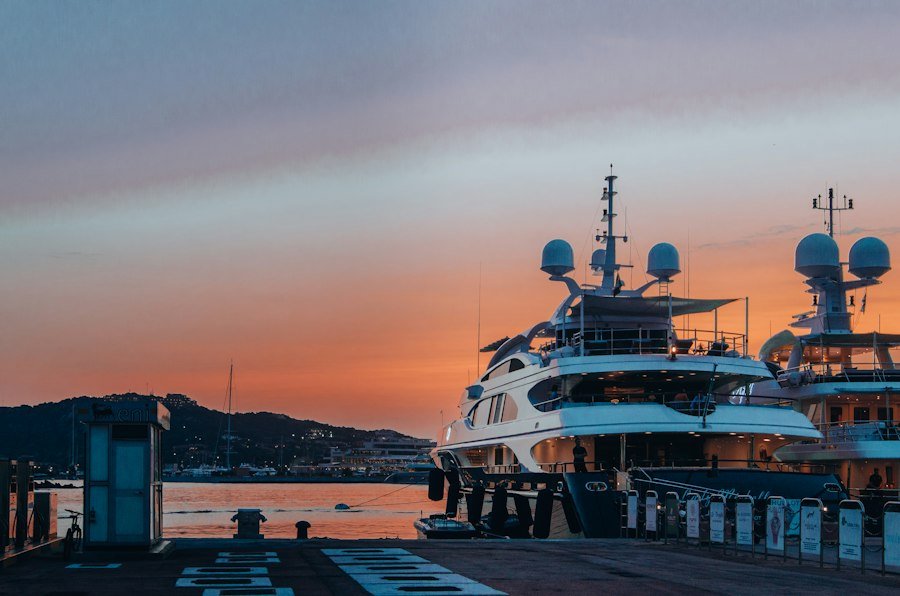
- Superyachts/Megayachts: These are the largest and most luxurious class, typically over 80-100 feet, often custom-built and requiring a full-time professional crew. They are essentially floating mansions.
Typical Use Cases for Yachts
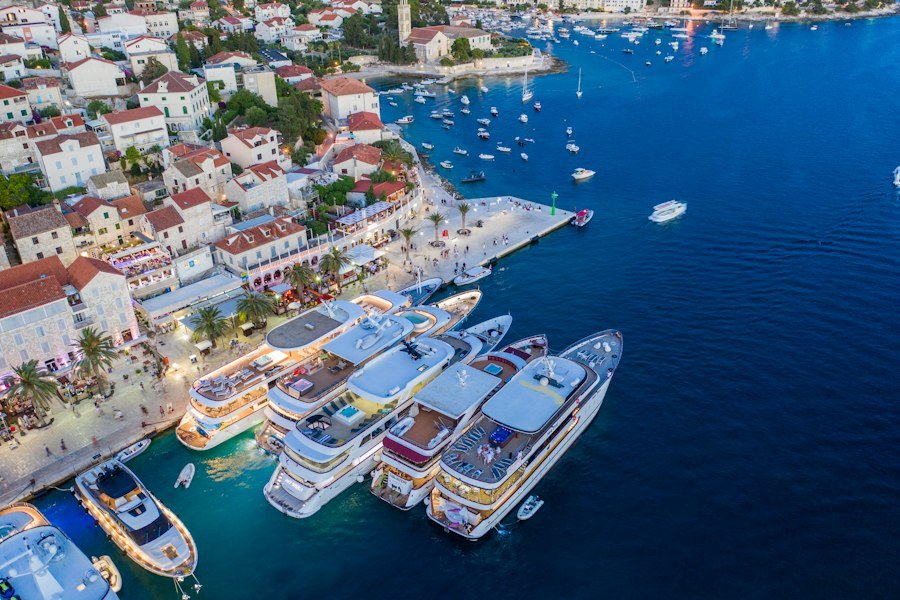
Yachts are for serious adventurers and those seeking a floating home away from home. Think extended coastal cruising, island hopping, international voyages, or living aboard for significant periods. They are designed for self-sufficiency, often with watermakers, generators, ample fuel and water storage, and sophisticated navigation systems. Entertaining guests in style is also a primary use case, with spacious salons, multiple cabins, and well-appointed galleys.
Advantages of Owning a Yacht
- Comfort and Luxury: Yachts offer superior amenities, more spacious living areas, and higher levels of comfort for longer trips.
- Extended Range: Designed for longer voyages, yachts have greater fuel and water capacities, and more robust systems for self-sufficiency.
- Increased Storage: Ample storage space for provisions, gear, and toys (dinghies, paddleboards, dive equipment).
- Privacy and Seclusion: Offers a private retreat for family and friends, away from crowded resorts or common tourist areas.
- Status and Prestige: While not the primary reason for purchase, yachts do carry a certain prestige and lifestyle association.
Size, Comfort, and Features: What You Get

This is where the rubber meets the road, or more accurately, the keel meets the water. The size and corresponding features are a major differentiator, directly impacting your comfort and capability.
The Role of Size in Boating Experience
Size isn’t just about how many people you can cram on board; it dictates how the vessel handles, how much weather it can safely take, and the level of comfort it provides.
Smaller Vessels (Boats)
Generally speaking, boats under 30-40 feet are more susceptible to rough water conditions. A choppy day that might be exhilarating on a 20-foot runabout can quickly become uncomfortable or even unsafe on a smaller craft if you’re venturing too far from shore. Space is at a premium, meaning cabins are often compact, and amenities like a full galley or proper head (toilet) might be rudimentary or non-existent. However, their smaller footprint allows access to shallower waters and tighter anchorages that larger vessels can’t reach. They are also much easier to dock and navigate in crowded marinas.
Larger Vessels (Yachts)
As you move into the yacht territory (typically 40 feet and above), the increase in length, beam (width), and displacement translates directly to a smoother ride in chop and swells. You gain significant stability, which is crucial for comfort on longer passages. The additional space allows for multiple private cabins, dedicated heads with showers, a fully equipped galley (kitchen), and comfortable salon areas for dining and lounging. This makes extended trips much more enjoyable, as you have the space to stretch out, entertain, and truly live aboard. However, this also means increased draft, limiting access to some shallow areas, and requiring more skill and space for maneuvering in tight quarters.
Comfort and Amenities
This is perhaps the most significant distinction in practical terms. What kind of experience are you looking for?
Basic Comforts in Boats
For most boats, “comfort” often means padded seating, a cooler for drinks, and maybe a small portable toilet.
- Seating: Open decks with bench seats, bucket seats, or bow seating.
- Shelter: A Bimini top for sun protection is common, sometimes a small cuddy cabin for storage or a quick nap.
- Galley: Usually non-existent, sometimes a small sink and space for a portable cooler.
- Head: Often a portable marine toilet (Porta-Potti) or a very basic pump-out head in a small enclosure.
- Sleeping: Limited to a cuddy cabin or by converting seating areas, usually for one or two people at most.
Luxury and Liveability in Yachts
Yachts are designed with liveaboard comfort in mind, akin to a small apartment or home.
- Cabins: Multiple private cabins with proper beds, storage, and often en-suite heads.
- Heads: Multiple full bathrooms with flushing toilets, sinks, and separate showers.
- Galley: Full-size kitchens with refrigerators, freezers, stoves, ovens, microwaves, and ample counter space.
- Salons: Spacious indoor living areas with comfortable seating, dining tables, and often entertainment systems.
- Deck Space: Ample outdoor lounging areas, flybridges, swim platforms, and sometimes even hot tubs or dedicated tender garages.
- Systems: Sophisticated electrical systems, air conditioning/heating, watermakers, generators, and advanced navigation electronics.
What’s Your Adventure Style? Matching Vessel to Vision
Before you even glance at prices, sit down and genuinely consider what you want to do with your vessel. Your adventure style is the single most important factor in determining whether a boat or a yacht is right for you.
Short Trips and Local Exploration
If your idea of a perfect day on the water involves heading out for a few hours, fishing, swimming, watersports, or picnicking in a nearby cove, a boat is almost certainly your best bet.
Ideal Scenarios for Boats
- Day Trips: Spontaneous outings on a whim without extensive planning.
- Watersports: Wakeboarding, tubing, water skiing.
- Fishing: Freshwater or nearshore saltwater fishing.
- Island Hopping (Short Distance): Exploring small islands within easy reach of a mainland base.
- Sunset Cruises: Enjoying the evening on local waterways.
- Lakes and Rivers: Navigating inland bodies of water.
Practical Considerations for Short Trips
For these kinds of adventures, you prioritize ease of use, lower operating costs, and quick access. You likely won’t need vast amounts of storage, multiple sleeping berths, or a full galley. The ability to trailer your vessel to different launch points can also be a huge advantage, opening up a wider range of destinations without the commitment of long-distance cruising. You want something that’s simple to clean up after a day of fun and ready to go again with minimal fuss.
Extended Cruising and Long-Term Living
If your dream involves multi-day voyages, exploring distant coastlines, potentially crossing oceans, or even making your vessel your permanent home, then you’re squarely in yacht territory.
Ideal Scenarios for Yachts
- Coastal Cruising (Multi-Day/Week): Exploring different towns and anchorages along a coastline over an extended period.
- Offshore Passages: Venturing further out to sea, requiring robust systems and self-sufficiency.
- Island Hopping (Long Distance/Remote): Cruising between more remote island chains.
- International Travel: Taking your vessel to different countries.
- Liveaboard Lifestyle: Making the yacht your primary residence.
- Entertaining: Hosting larger groups for dinners or parties on board for extended periods.
Practical Considerations for Extended Adventures
For long-term cruising, self-sufficiency is paramount. You need reliable engines, ample fuel and water capacity (or systems to produce them), redundant navigation equipment, comfortable sleeping arrangements, a functional galley for meal preparation, and sufficient storage for provisions and spare parts. Stability and seaworthiness become critical for safety and comfort in varying weather conditions. The ability to generate your own power (via generator, solar, or wind) is also often essential. You’re looking for a vessel that can reliably support life at sea for weeks or months at a time.
Budgeting Beyond the Purchase Price
This is where many aspiring boaters (and yacht owners) get caught off guard. The initial cost is just the down payment on a lifestyle. Understanding the ongoing expenses is critical for a sustainable and enjoyable experience.
Initial Purchase Cost
Unsurprisingly, this is the most apparent difference.
Boat Purchase Prices
- Entry-Level (New): A decent new small runabout, fishing boat, or pontoon can start anywhere from $15,000 to $40,000.
- Mid-Range (New): Larger, more feature-rich boats (e.g., 25-foot bowriders, offshore fishing boats) can range from $50,000 to $150,000.
- Used Boats: The used market offers significant savings, with many well-maintained boats available for a fraction of new prices, often starting under $10,000.
Yacht Purchase Prices
- Entry-Level (Smaller Cruising Yacht, New): A new 35-40 foot sailing or motor yacht can start from $300,000 to $700,000.
- Mid-Range (New): Larger, more luxurious production yachts (50-70 feet) will easily be in the $1 million to $5 million+ range.
- Superyachts/Custom Builds: These can run into the tens or hundreds of millions of dollars.
- Used Yachts: The used market is robust, but even a used 40-foot yacht will likely be in the $100,000 to $500,000+ range depending on age, condition, and equipment.
Ongoing Operational Costs
This is where the real differences become apparent and often surprise new owners.
Boat Operating Expenses
- Fuel: Smaller engines and shorter trips mean lower fuel bills, but this still varies greatly by usage.
- Maintenance: Routine engine service, detailing, winterization/de-winterization. Simpler systems generally mean lower costs. Expect a few hundred to a couple thousand dollars annually, depending on size and complexity.
- Storage: Trailering at home is free. Marina wet slips or dry stack storage can be a few hundred to over a thousand dollars per month, depending on location and boat size.
- Insurance: Varies by boat value, location, and owner’s experience, often a few hundred to a thousand dollars per year.
- Registration/Licensing: Annual fees, usually nominal.
- Repairs: Outboard engines can be cheaper to repair than complex inboard systems.
Yacht Operating Expenses
- Fuel: Larger engines and longer ranges mean significantly higher fuel consumption. This can be thousands of dollars per month for active cruisers.
- Maintenance: Much more complex systems (multiple engines, generators, air conditioning, watermakers, hydraulic systems, electronics) require specialized and more frequent maintenance. Expect 10% of the purchase price annually as a general rule of thumb for maintenance, repairs, and upgrades, especially for older vessels.
- Dockage/Marina Fees: Can be thousands of dollars per month for larger slips, especially in desirable locations. Seasonal rates and transient rates vary widely.
- Insurance: Substantially higher due to the vessel’s value and complexity, often thousands to tens of thousands per year.
- Crew (Optional but Common): For larger yachts, a professional crew (captain, mate, chef, stewardess) is essential, adding significant salary, benefits, and living expenses.
- Haul-Outs and Bottom Paint: Essential for hull maintenance, usually every 1-3 years, and can be several thousands of dollars each time.
- Provisioning: For extended trips, the cost of food and supplies for multiple people over weeks or months adds up.
Depreciation and Resale Value
Like cars, both boats and yachts depreciate. However, well-maintained vessels with desirable features tend to hold their value better. The used market for boats is vast, offering many options. For yachts, the market can be more specialized, but a well-kept yacht with updated systems will always find a buyer. Overly customized or neglected vessels will suffer significantly in resale value.
Considerations for Skill and Maintenance
| Criteria | Yacht | Boat |
|---|
| Size | Typically 40 feet and above | Usually under 40 feet |
| Purpose | Luxury cruising, entertaining, long trips | Recreational activities, fishing, short trips |
| Cost | High purchase and maintenance costs | More affordable purchase and upkeep |
| Maintenance | Requires professional crew or extensive upkeep | Can be maintained by owner with basic skills |
| Storage | Needs marina or specialized docking | Can be stored on trailers or smaller docks |
| Speed | Moderate to fast, depending on design | Varies widely, often faster for smaller models |
| Comfort | High-end amenities, spacious cabins | Basic to moderate comfort features |
| Skill Level Required | Advanced boating skills recommended | Beginner to intermediate skills sufficient |
Your comfort level with operating and maintaining a vessel is another critical factor. It’s not just about affording it; it’s about confidently managing it.
Learning to Operate and Navigate
Driving a car is one thing; piloting a vessel is another entirely.
Operating a Boat
- Learning Curve: Generally shorter and less steep. Basic boating courses (required in many areas) cover essential safety, navigation rules, and docking techniques.
- Maneuverability: Smaller boats are typically more agile and forgiving in docking and tight spaces.
- Navigation: For day trips on familiar waters, visual cues and basic chart plotters are often sufficient.
- Licensing: Many jurisdictions require a basic boating license or safety certificate.
Operating a Yacht
- Learning Curve: Significantly steeper. Requires advanced navigation skills, understanding of complex systems, heavy weather handling, and often international maritime regulations.
- Maneuverability: Larger vessels have more inertia and windage, making docking and close-quarters maneuvering much more challenging. Bow and stern thrusters help, but skill is paramount.
- Navigation: Demands a comprehensive understanding of electronic navigation systems (radar, GPS, AIS, autopilot), paper charts, weather forecasting, and celestial navigation for long passages.
- Licensing: For larger yachts, especially if carrying passengers for hire or entering international waters, professional certifications (e.g., Captain’s license, Master’s license) may be required. Even for private use, extensive training is highly recommended.
Maintenance and Repairs
This is often the hidden cost and time sink for boat owners.
Boat Maintenance
- Simpler Systems: Usually one or two outboard or relatively simple inboard engines. Less complex electrical and plumbing.
- DIY Potential: Many routine tasks like cleaning, minor engine checks, and simple repairs can be done by the owner, saving labor costs.
- Accessibility: Components are often easier to access for maintenance.
- Winterization: A seasonal ritual for many boats in colder climates, involving draining systems and protecting the engine.
Yacht Maintenance
- Complex Systems: Multiple engines, generators, hydraulic systems, advanced electronics, watermakers, air conditioning, refrigeration, waste treatment systems – the list is extensive. Each requires regular servicing.
- Professional Reliance: While some tasks can be DIY, many repairs and maintenance items require specialized technicians (diesel mechanics, electricians, refrigeration experts).
- Accessibility: Components can be harder to reach, buried deep within engine rooms or behind intricate panels.
- Constant Vigilance: Systems onboard a yacht are under constant stress from the marine environment. Proactive maintenance and daily checks are crucial to prevent major breakdowns.
- Time Commitment: Even if hiring professionals, coordinating repairs and ensuring work is done correctly can be a significant time commitment for the owner.
Making Your Decision: Practical Steps
So, how do you finally land on the right choice? It comes down to honest self-assessment and practical research.
Define Your Adventure Goals
Be brutally honest with yourself. Are you really going to embark on a multi-month cruise to the Caribbean, or is your dream more about fishing on the local lake every weekend?
- How often will you use it? Daily, weekly, monthly, annually?
- What activities are primary? Fishing, watersports, entertaining, long-distance travel, liveaboard?
- Who will be with you? Solo, couple, small family, large groups?
- What’s your comfort level with travel? Day trips, overnight, week-long, multi-month?
- What kind of waters will you navigate? Lakes, rivers, protected coastal, open ocean?
Assess Your Budget (Realistically)
Don’t just think about the purchase price. Map out the first 3-5 years of ownership, including:
- Purchase price (loan payments if applicable)
- Insurance
- Storage/Dockage
- Estimated fuel costs (based on your expected usage)
- Annual maintenance and repairs (using the 10% rule for yachts, a smaller percentage for boats)
- Gear and equipment upgrades
- Contingency fund for unexpected repairs
Consider Your Experience Level and Time Commitment
- Are you comfortable with mechanical tasks? Or will you rely entirely on professionals?
- How much time are you willing to dedicate to learning to operate?
- How much time are you willing to dedicate to cleaning and maintenance?
- Do you have the patience for complex problem-solving in remote locations?
Test the Waters
Before making a massive commitment, try to experience both sides.
- Rent or Charter: This is by far the best way to get a feel for different types of vessels without the financial burden of ownership. Rent a pontoon for a day, charter a sailing yacht for a week, or even try a smaller motor yacht.
- Take Boating Courses: Enroll in basic or advanced boating and navigation courses. This will not only prepare you but also help you understand the demands of operating various vessels.
- Talk to Owners: Seek out current boat and yacht owners. Ask them about their real-world experiences, the joys, and the headaches. Marina communities are often great places to find candid advice.
Ultimately, there’s no single “right” answer. The ideal choice between a boat and a yacht is deeply personal, reflecting your aspirations, resources, and willingness to embrace the unique challenges and rewards each offers. By carefully considering these factors, you’ll be well on your way to making an informed decision for your next, or perhaps even first, aquatic adventure.